
TELEGRAM ADVERTISING · ILLUSTRATED GUIDE
How to Run Telegram Ads: Targeting, Copy, Costs and Results
From choosing an audience to understanding CTR and CPA: a complete walkthrough with real interface examples.
This illustrated guide explains how to plan Telegram ads, research audiences, prepare a destination, write ad copy, navigate moderation and measure results.
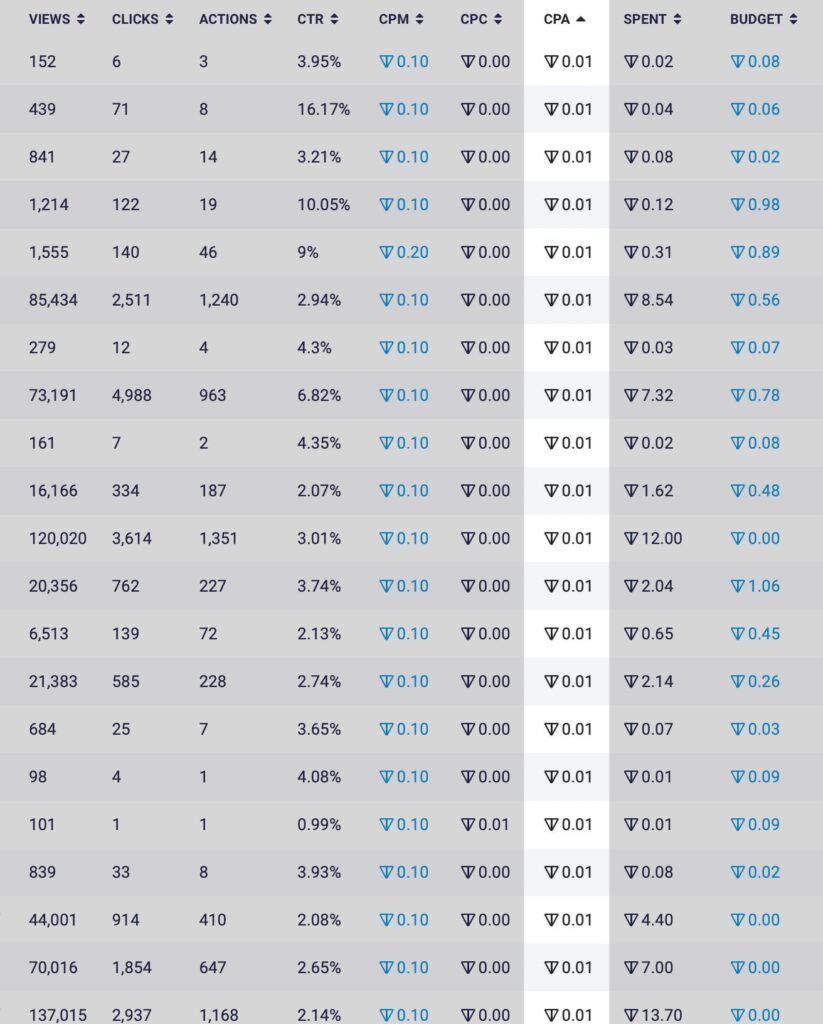
The supplied 2025 case study reports campaigns with a displayed CPA of 0.01 TON and cites approximately $0.03 on May 15, 2025. These are the original author’s historical examples, not ADSGRAM campaign results or a promised acquisition cost.
This walkthrough covers advertising on Telegram to attract views, subscribers and relevant traffic.
Let’s dive right in…
What is Telegram Ads & How Does It Work?
Telegram Ads is the official platform that lets anyone run ads inside the Telegram app — just like you would on Facebook or Instagram.
It uses an auction model, which means your ads compete with others for placement.
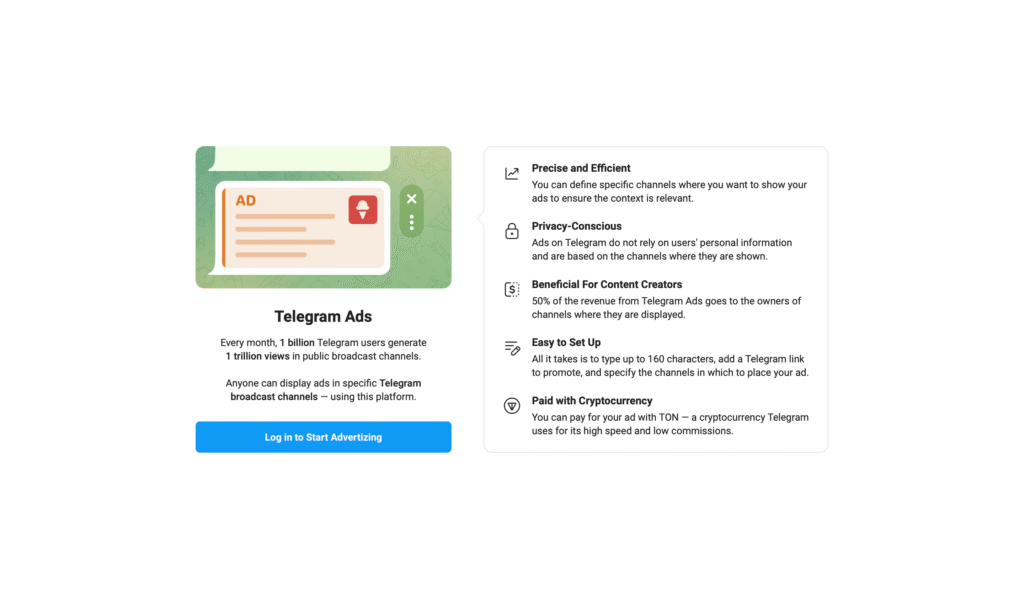
The documented sponsored-message flow serves public channels with 1,000 or more subscribers. The supplied examples also illustrate other placement surfaces.
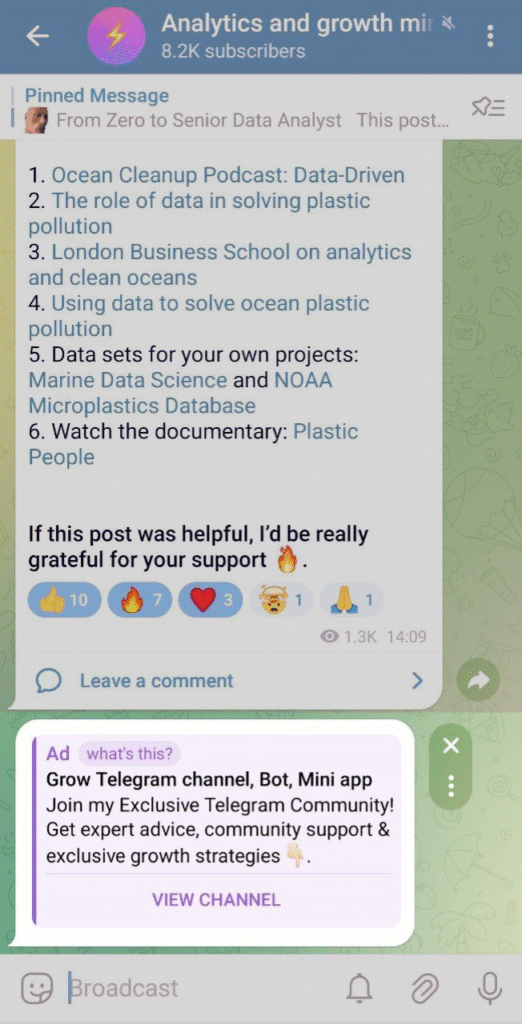
The next screenshot shows an advertisement in Telegram global search results.
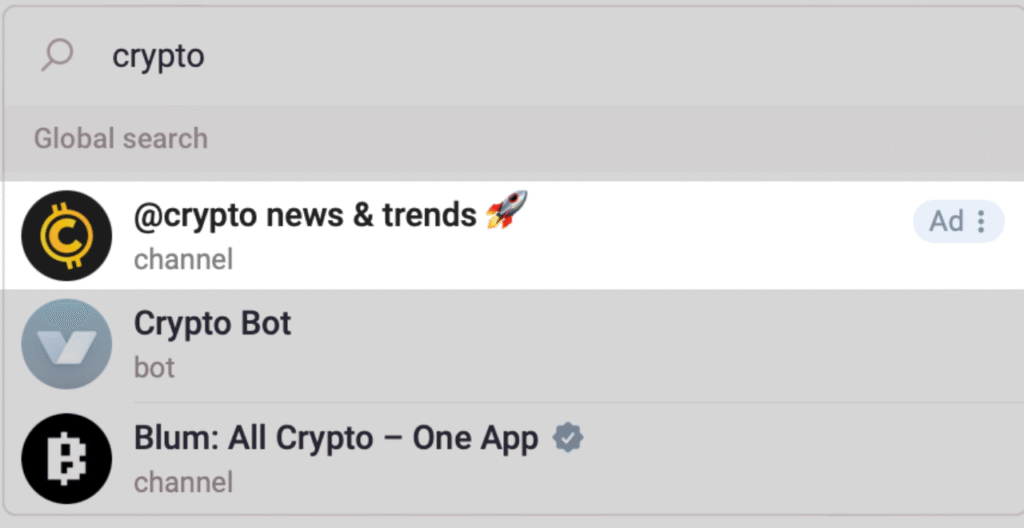
The supplied examples also show a sponsored message in a bot. Check current bot eligibility and placement availability in your account.

The 2025 source reports that Telegram reached 1 billion monthly active users in March 2025.
The same source cites 1 trillion monthly channel views; this is historical context, not a live audience count.
So yes — there’s a huge opportunity if you know how to run Telegram ads the right way.
Key Factors for High-Converting Telegram Ads
Just like Google or Facebook, Telegram ads work as a system. And every part matters.
Here’s what you need to get right (and consider):
Audience targeting
Ad copy
Content in your channel or bot
CPM
Moderation rules
If one part is weak, your whole campaign can flop.
In the next sections, we’ll break down each part — and by the end, you’ll be able to build high-converting Telegram ads from scratch.
Step #1: Choose the Right Audience to Target
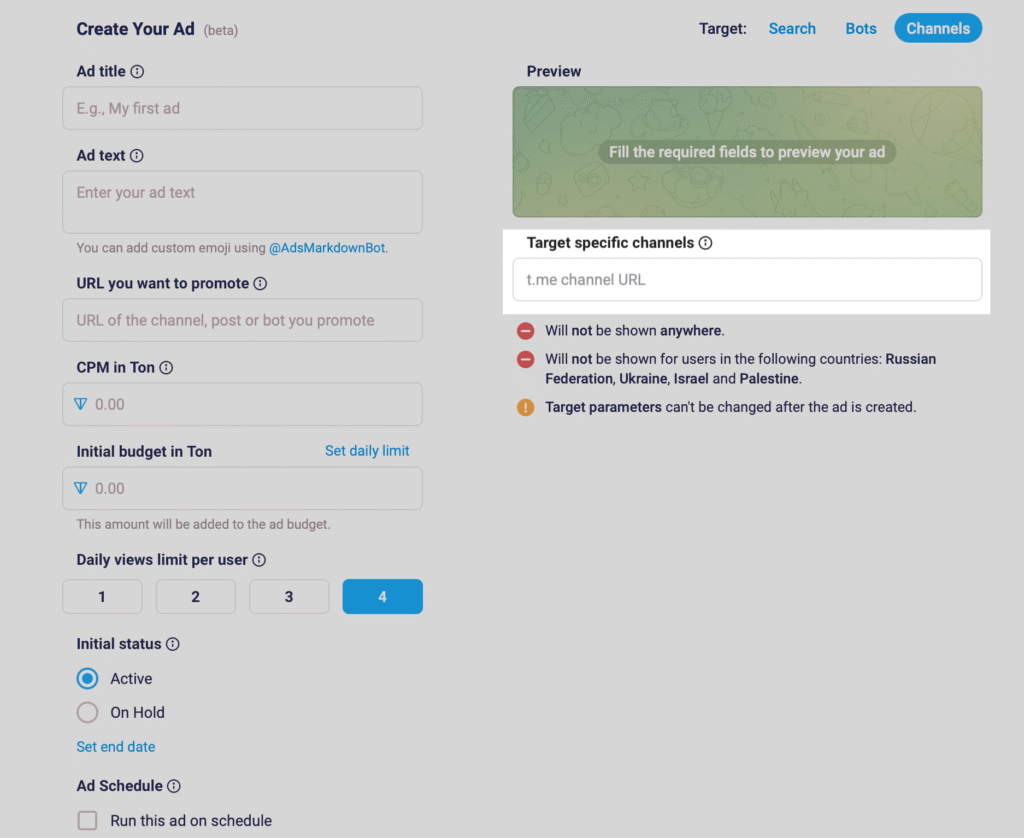
Before launching any Telegram ad, you need to decide who will see it.
If you target the wrong audience, your Telegram ads will flop. You need to pick the right target — channels, bots, keywords — that match your niche and audience perfectly.
It’s that simple.
Right now, Telegram lets you advertise in three main ways:
Public channels with more than 1,000 subscribers
Bots available in your account’s targeting interface
Global search using keywords
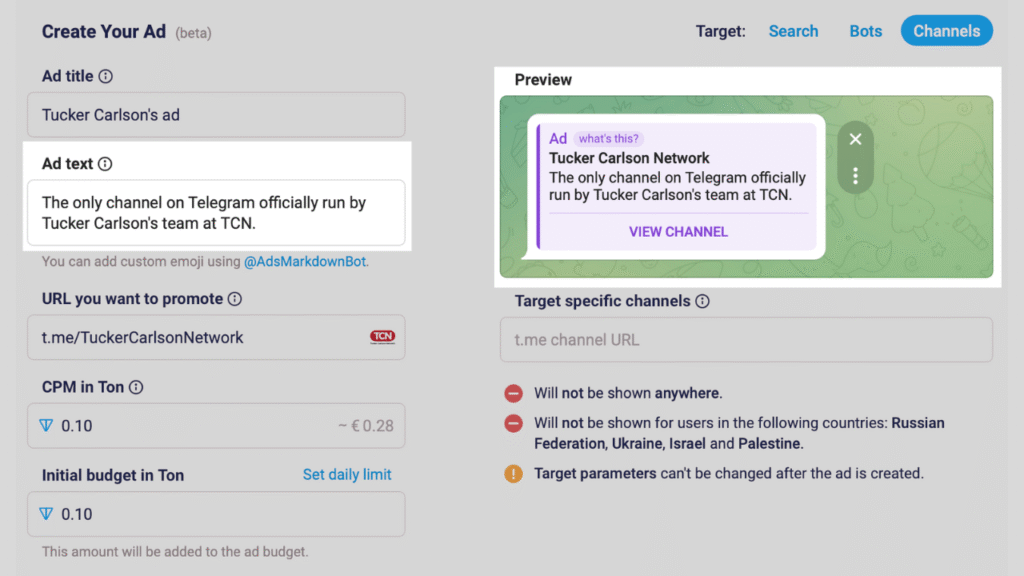
Finding a relevant channel matters more than the sheer size of the channel directory.
The most effective ways are:
Use in build telegram feature “Similar channels”. This is a goldmine for finding relevant audiences quickly.
Search on tgstat.com. TGStat is one of the best tools for finding Telegram channels by category, keyword, or topic. It also shows channel stats.
Besides finding good Telegram channels and bots, you also need to pay attention to the following things:
First, test different types of Telegram channels, bots, or keywords. You might be wondering:
“Should I only target channels in my niche?”
Nope.
For example, if you’re promoting a crypto tool, don’t just test crypto channels. Try:
Tech channels
Finance channels
Humor channels
Smarter advertisers test broadly and then double down on what converts.
Second, use One Ad = One Placement.
Let’s clear up a big mistake beginners make:
They try to promote multiple channels or bots in one ad.
Here’s the problem:
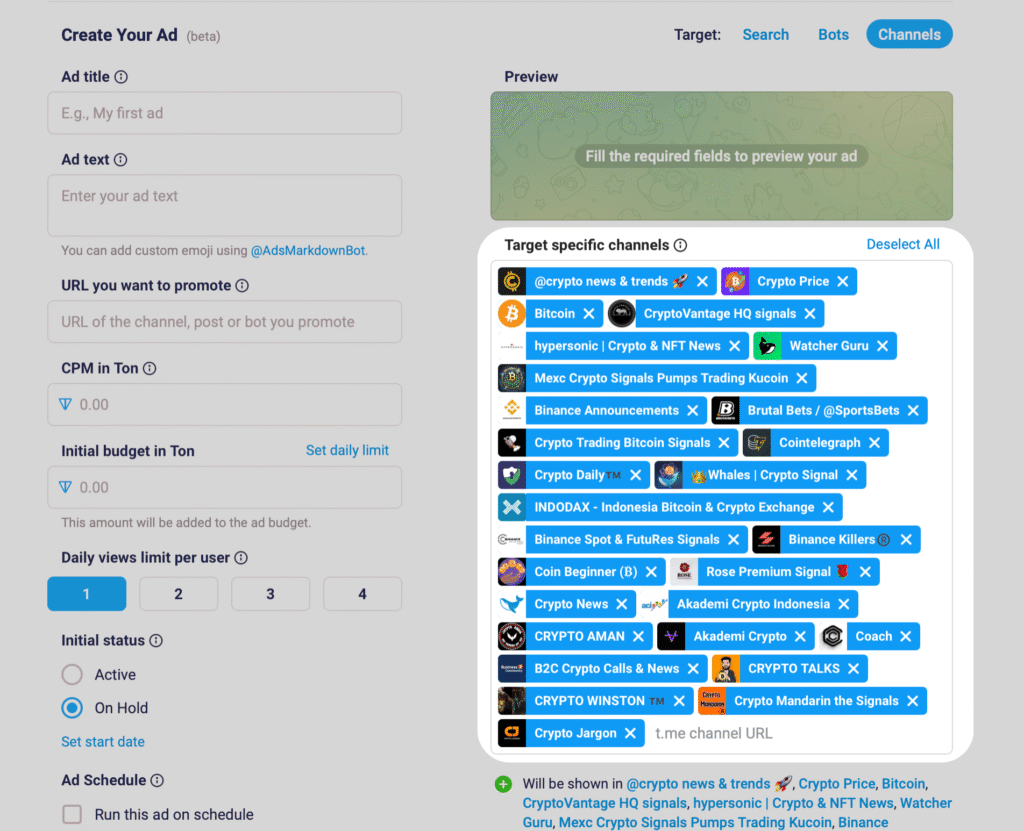
That means:
Wasted budget
Messy stats
Poor decisions
Some channels even fake subscribers and views. So if you’re promoting more than one at a time, you won’t know which ones are real — or which ones are trash.
Keep it simple: One ad = One channel, bot, or keyword.
Third, Don’t sleep on small channels and bots.
Here’s the bottom line:
Big channels aren’t always better.
Smaller, niche channels usually have:
Lower competition
Cheaper CPM
More engaged followers
Shifting toward micro and nano-influencers should be a trend.
Step #2: Optimize Your Telegram Ad Destination
Your ad destination is where users land after they click your Telegram ad — and it plays a huge role in how well your campaign performs.
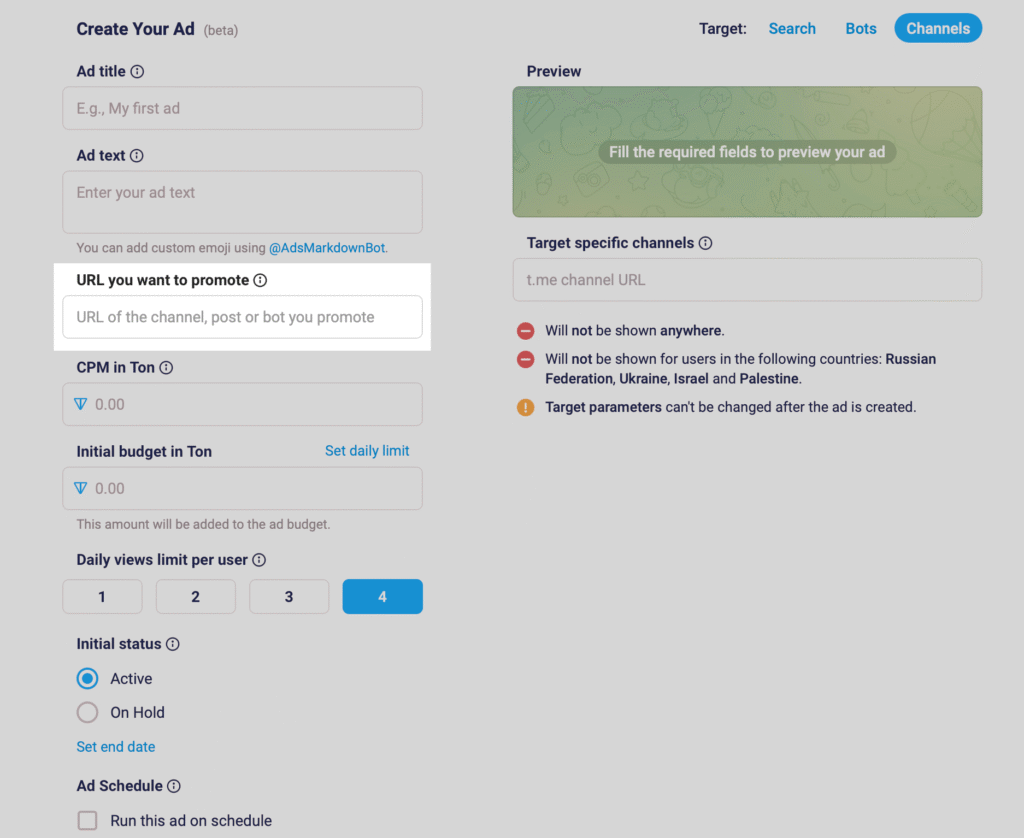
Before spending on traffic, ask yourself:
Where are you sending the traffic?
Because here’s the truth:
Even the best Telegram ads won’t convert if your channel or bot is weak. A dull, messy, or empty page will push visitors away — fast.
When you’re learning how to run Telegram ads, this part is often ignored. But it’s one of the biggest reasons ads fail.
Telegram moderation rejects ads for two main reasons:
Destination Requirements not met
Prohibited Content present
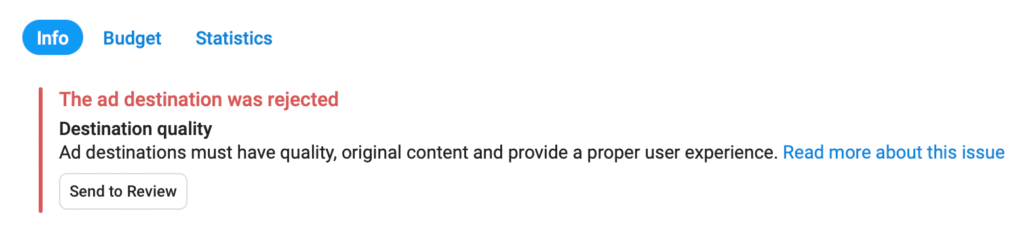
An incomplete or low-quality destination can fail review and lose prospective subscribers.
Take a look at the picture — which content do you think works best for Telegram?
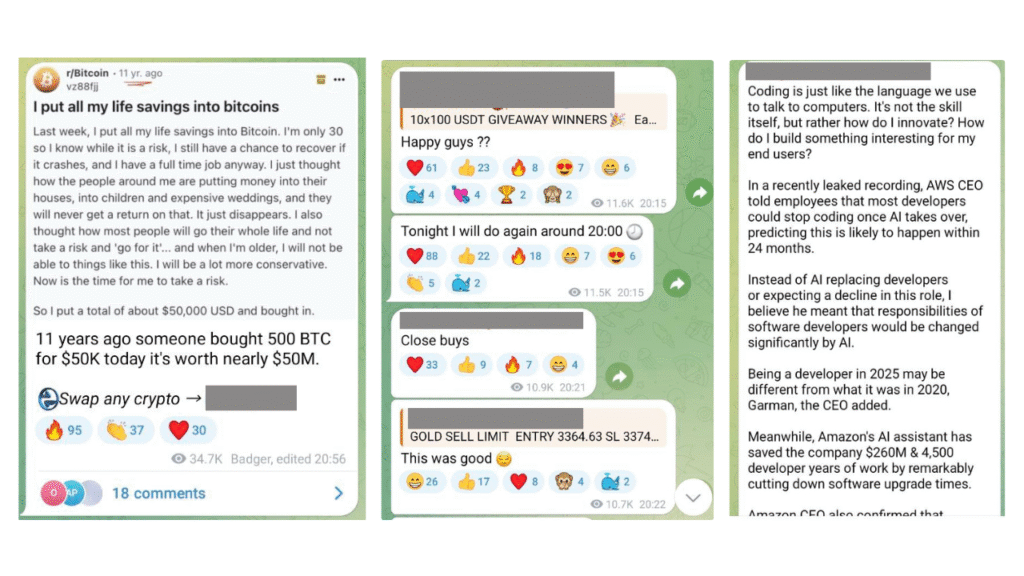
Post #1: The Bitcoin Risk Story (Left) illustrates a strong narrative hook. This is a copywriting assessment, not proof of better conversion or endorsement of the financial claim.
What works:
Emotional, high-stakes storytelling
Clear, powerful takeaway: $50K → $50M
Strong CTA (“Swap any crypto → @…”)
Clean formatting and easy to read
Post #2: Crypto Giveaway & Trading Signals (Middle) is weak.
The original article predicts a high rejection risk here, but provides no measured rejection rate. Approval cannot be inferred from this example alone.
Why?
No real value for new readers — it’s just hype
Looks spammy and low-trust — Telegram moderation flags this style fast
No clear offer, benefit, or educational angle
Post #3: AI & Coding Insight (Right) has potential. What works:
Expert positioning: analysis of AWS CEO’s statement
Long-form, thoughtful content
High-trust, no hype
What’s missing:
No visual breaks (it’s a wall of text)
No hook or CTA
May lose attention before the key point
If you want to succeed with Telegram — whether it’s ads, growth, or engagement — good content is non-negotiable. Clear, valuable, and well-structured posts are what turn views into real results.
Use Analytics to Guide Your Strategy.
Don’t guess. Measure.
Use channel analytics to compare like-for-like posts, audience activity and acquisition sources. ADSGRAM’s channel research and connected-channel tools can help organize the available evidence; coverage depends on the data collected.
Then?
Double down on what works — and cut what doesn’t.
Most people focus only on their posts — but these elements matter just as much.
They’re key for:
Building a loyal audience
Getting Telegram Ads approved
Making your channel look professional
Here’s what you need to optimize besides your posts:
Channel bio — clear, niche-relevant, and value-driven
Profile photo — professional and aligned with your brand
Visuals — make sure your images display properly on both mobile and desktop
For example, If you add images, make sure they’re fully visible on all devices.
Use this format:
If you’re posting 1, 2, 5, 6, 7, 8, 9, or 10 images, use square images (1080 x 1080). Each of the 1, 2, 5, 6, 7, 8, 9, or 10 images should be square.
If you’re posting 3 or 4 images, there should be one rectangle (1920 x 1080), and the rest should be squares.
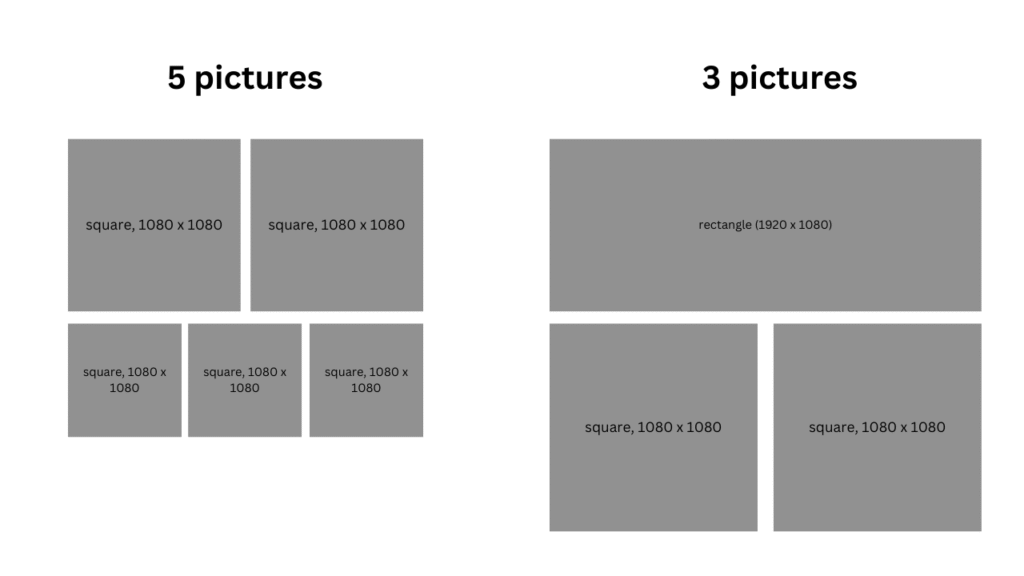
Poor formatting can create a poor first impression.
Final Reminder.
Even the best Telegram ads won’t save a bad content.
Step #3: Nail Your Telegram Ad Copy
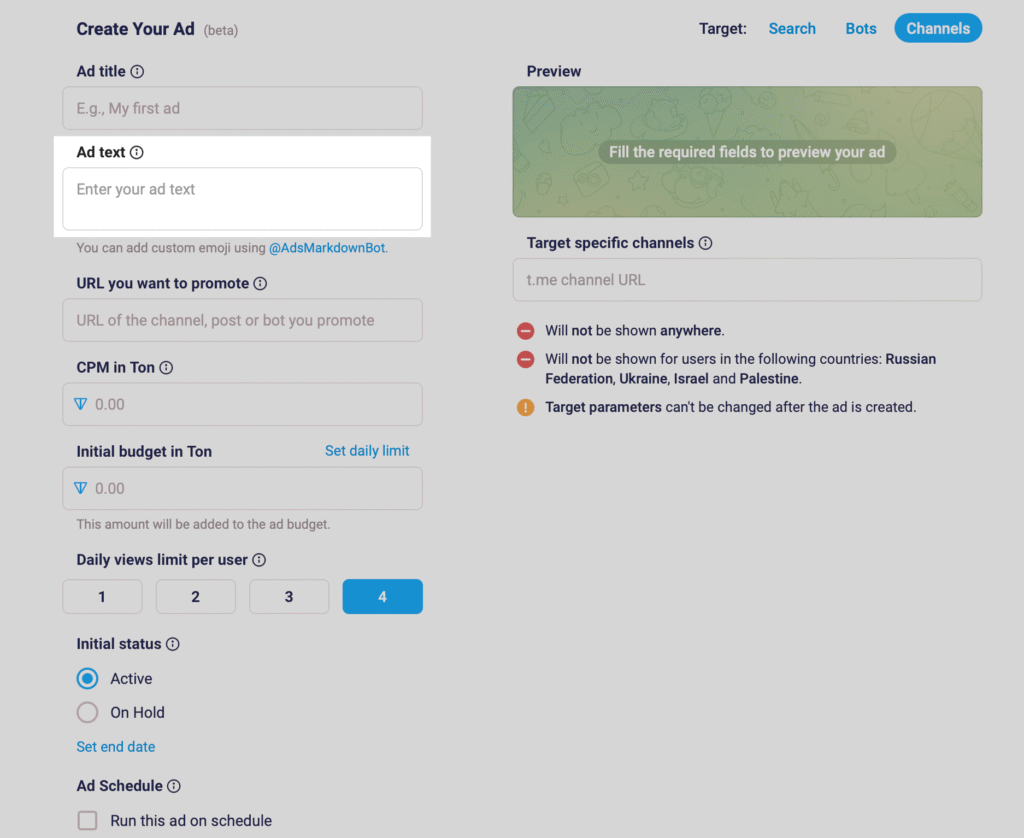
Screenshot of Telegram Ads Manager interface showing ad creation for channels. Fields include ad title, ad text, URL to promote, CPM in TON, initial budget, daily views limit per user, and targeting options. Interface also shows targeting restrictions and ad preview placeholder. Useful for learning how to create and optimize Telegram ads. Screenshot of Telegram Ads Manager interface showing ad creation for channels. Fields include ad title, ad text, URL to promote, CPM in TON, initial budget, daily views limit per user, and targeting options. Interface also shows targeting restrictions and ad preview placeholder. Useful for learning how to create and optimize Telegram ads. Let’s be honest:
Even if you’re targeting the right audience and sending traffic to a great channel — your ad won’t work if the copy doesn’t grab attention.
Your ad copy is your first impression. If your message isn’t clear, catchy, or relevant, users will scroll right past.
Ask yourself: If I saw this in a Telegram channel, would I care enough to click?
If the answer is no… rewrite it.
Guess which ads are more likely to pass moderation and get a higher CTR?
CTR (Click-Through Rate) is the percentage of people who see your ad and click on it. A higher CTR means your ad is engaging and relevant to the audience.
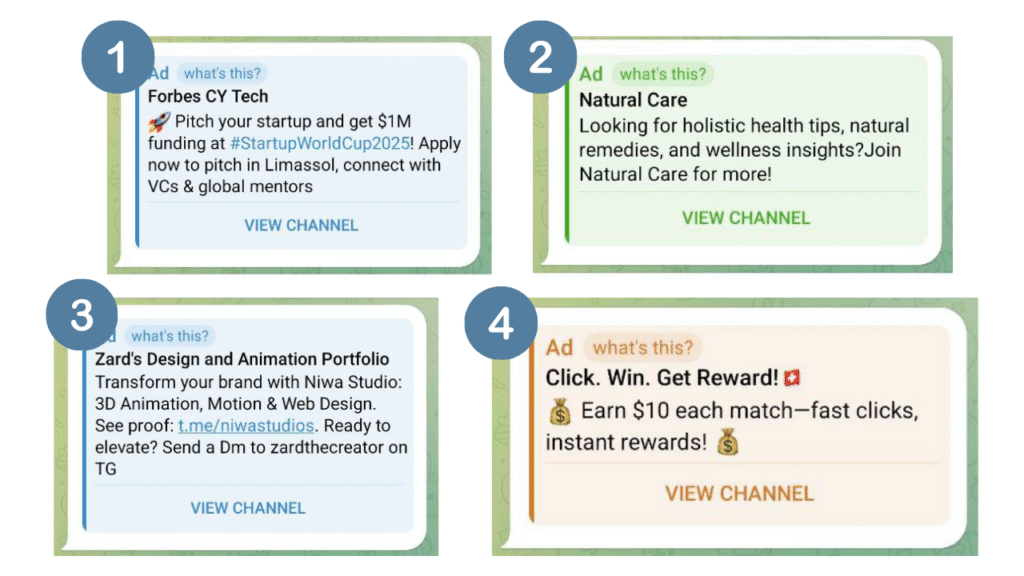
Example #1, Forbes CY Tech: the original author’s strongest copywriting example.
Clear value: “Get $1M funding” is a strong, tangible offer.
Targeted context: Startup World Cup + VCs + mentors — appeals to a very specific, relevant audience.
Urgency: “Apply now” drives immediate action.
Clean formatting: Short lines, emoji used smartly.
Moderate ad is Zard’s Design and Animation Portfolio (#3):
Pros: Clear offer, proof link, good CTA
Cons: Slightly cluttered. Could improve visual flow with spacing, emojis, or bullet structure.
Weak ad is Natural Care (#2):
Generic: Doesn’t say what makes it special
No hook: No emotional or problem-solving angle
Weak CTA: “Join Natural Care for more” is flat
Another weak ad is Click. Win. Get Reward! (#4):
Red flag for moderation: Exaggerated claim (“$10 each match”) = likely rejected
Looks scammy: Too pushy, no real value or explanation
Low trust: No details, no proof, no clear offer structure
“What’s the difference between #1 and #4? Both ads promise money, right?”
Yes — but how they do it is completely different.
Forbes CY Tech promotes a startup competition. It mentions funding in a realistic, business-oriented context. The ad builds trust with clear goals (pitching, connecting with VCs), and doesn’t make exaggerated claims. It sounds credibleand professional.
Click. Win. Get Reward! sounds like a quick-cash scheme. It offers instant money for “fast clicks” — with no explanation. It feels vague, spammy, and lacks context or trust. That’s exactly the type of ad that gets rejected by Telegram moderation.
So even if two ads mention money, the difference is in the tone, clarity, and credibility. One builds trust. The other raises red flags.
Step #4: Understand Telegram Ads Moderation (Before You Launch)
If you’re learning how to run Telegram ads, you might think it’s as simple as writing a post, placing an ad, and watching the views roll in.
But here’s the truth:
Telegram Ads go through strict moderation. Every ad — and more importantly, every destination (channel, bot, or website) — is reviewed carefully.
That means:
If your Telegram ad violates any policy
If your channel or bot doesn’t meet Telegram’s destination quality standards
— the moderation system might keep rejecting future ads unless you completely fix all the issues.
Step #5: Analyze Your Telegram Ads Then Optimize Like a Pro
Launching a Telegram ad is easy.
But getting cheap, high-converting leads consistently?
That takes data, testing, and ruthless optimization.
The original case study demonstrates this — using a real Telegram ads example with a reported CPA of 0.01 TON.
The fastest way to burn money on Telegram is to assume your first ad will be a winner.
A structured testing process:
Test different channels (audiences)
Try unique copy for different target channels (don’t recycle the same text everywhere)
The 2025 example starts at 0.10 TON CPM. Telegram’s current getting-started guide also lists 0.1 TON as a minimum for its described sponsored-message flow. A minimum bid is not a guarantee of delivery or a universally safest bid; confirm the value shown in your account.
CPM (Cost Per Mille) is how much you pay to show your ad 1,000 times. Telegram uses CPM bidding, which means you pay based on how many times people see the ad — not click.
By changing the copy and channel, you’ll quickly see what combination of message + audience works best for you.
Here are the exact Telegram Ads metrics you need to track:
Metric
What It Tells You
Clicks
Low clicks = weak ad copy or irrelevant targeting. Try changing the copy or testing a new channel.
CTR
Low CTR = weak ad copy or irrelevant targeting. Try changing the copy or testing a new channel.
Actions
Low actions = users aren’t engaging after clicking. Reevaluate your landing channel or bot experience.
CPC
High CPC (high CPC means clicks are expensive) = weak ad copy or irrelevant targeting. Try changing the copy or testing a new channel.
CPA
High CPA (you’re paying too much per result) = Optimize both your ad and your destination for better conversion.
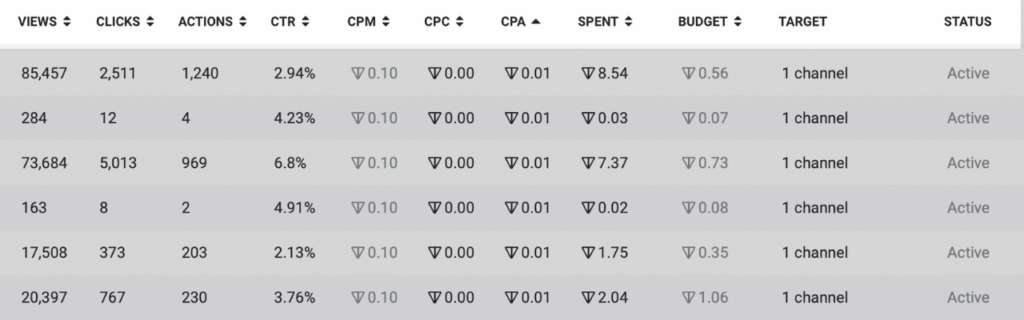
If CTR is low, possible explanations include:
Weak ad copy
The wrong target audience (channel, bot, keyword)
That’s a clear signal: turn it off, or fix it fast.
If an ad has low CTR, high CPC or no actions after 1,000 views, investigate the audience, message and destination. This is a diagnostic checkpoint, not a universal stop rule. Consider your pre-set spend limit, conversion delay and sample size before pausing or changing it.
Running Telegram ads in 2025 isn’t about luck — it’s about strategy.
If you focus on the right audience, write clear copy and posts, and optimize based on data, you can evaluate the cost of real results. A few cents per subscriber is a historical case-study outcome, not an expected result for every advertiser.
Start small, test smart, and let the numbers guide you.
Your next high-converting campaign is one tweak away.
Clarifications for your next campaign
Channel-post formatting and ad-text formatting are different. The album sizes above are practical examples, not mandatory Telegram dimensions. Preview your actual album on mobile and desktop. For sponsored-message text, Telegram’s current guidelines specify 160 characters and prohibit line breaks and list formatting; a screenshot is not a guarantee of approval.
One placement per test is a way to isolate results, not a platform requirement. Small channels can be useful tests, but they are not automatically cheaper or higher quality. Search and bot placements shown here should be checked against the options available in your own account.
Telegram advertising questions
How much do Telegram ads cost?
Your spend depends on the bid, available inventory and delivered impressions. CPM means cost per 1,000 impressions. Do not confuse CPM with the cost of a click or a new subscriber; calculate those from your own results.
How do I calculate CTR, CPC and CPA?
| Metric | Calculation | Interpretation |
|---|---|---|
| CTR | Clicks ÷ impressions × 100 | The share of impressions that produce clicks. |
| CPC | Spend ÷ clicks | Average cost of a click. |
| CPA | Spend ÷ attributed actions | Cost of the specific action you measured. |
| CPM | Spend ÷ impressions × 1,000 | Effective cost per 1,000 impressions. |
If the denominator is zero, the metric is unavailable, not zero. A rounded 0.00 in a screenshot does not mean traffic was free. Subscriber actions, bot starts and purchases are different outcomes.
Why was my Telegram ad rejected?
Read the exact review reason. Check the ad, destination, language alignment and functionality together, fix the underlying issue and request review. No template can guarantee approval.
Can I change targeting after creating an ad?
Telegram’s documented flow fixes targeting after creation. Use its similar-ad workflow for a new targeting test, and review the new budget and status before launch.
How can ADSGRAM help?
Research channels, explore ad creatives and connect your channel to organize available evidence. Research tools require Telegram sign-in; this guide is public.
References and next steps
Historical tutorial and screenshots: Telegram Hero, 2025, supplied for this guide. Current platform references checked October 18, 2026: Telegram Ad Platform Explained and Ad Policies and Guidelines.
Plan your first placement →
Türkçe: Telegram reklam rehberi →
ADSGRAM Telegram Ads documentation →